
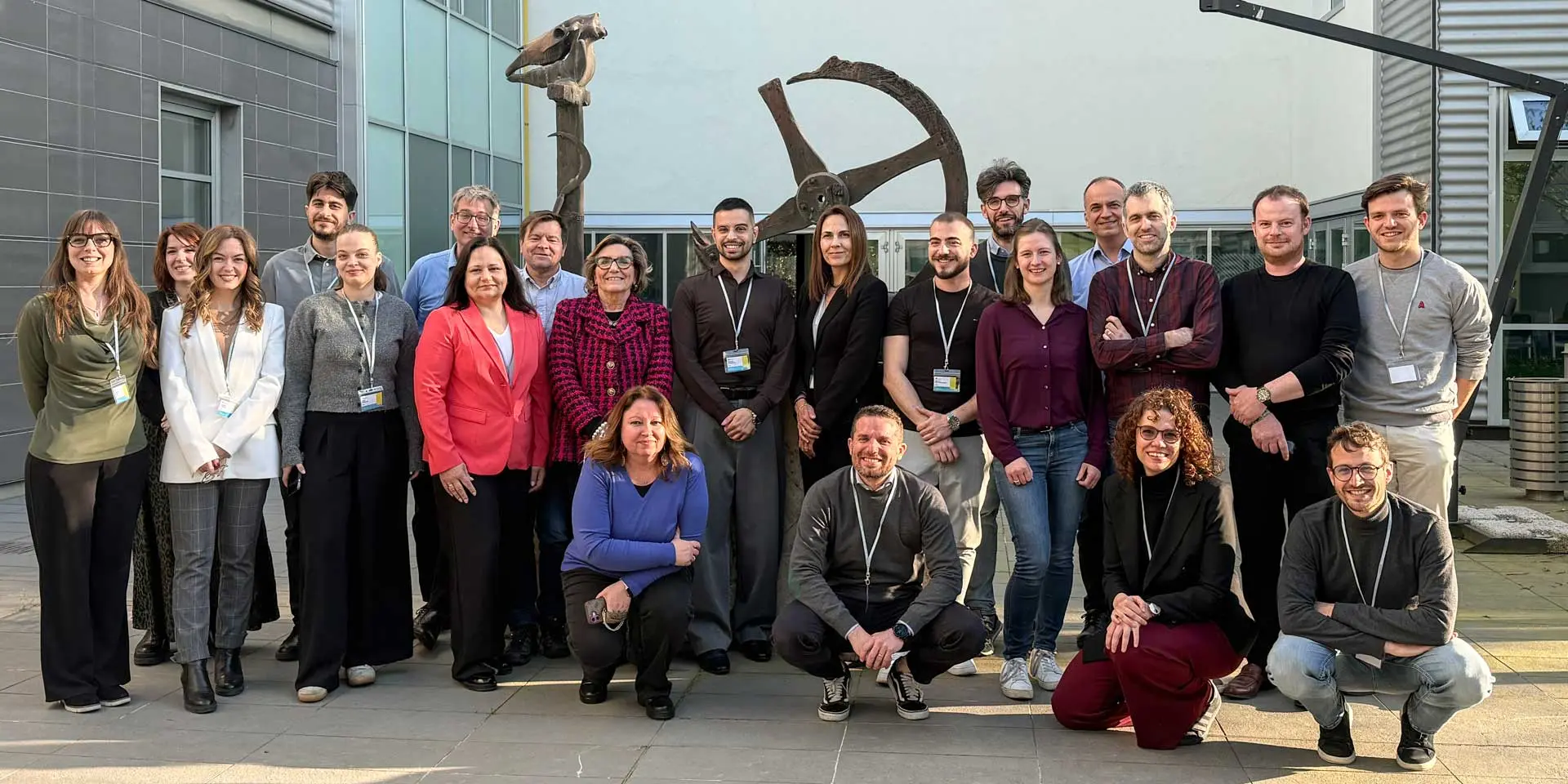
The 3rd Annual Meeting of the PRUDENT project focused on using green nudges to encourage sustainable agricultural and forestry practices. European partners came together to share results, present field experiments, and define policy strategies to support sustainability and the future of the Common Agricultural Policy.
The Department of Management, Engineering of Politecnico di Milano recently hosted the 3rd Annual Consortium Meeting of the Horizon Europe project PRUDENT, held on 19–20 March 2026. The meeting brought together project partners from across Europe to review progress, share results, and coordinate the next phases of research and policy work. PRUDENT investigates the effectiveness of behavioural interventions - green nudges - in encouraging the adoption of more sustainable practices in the agricultural and forestry sectors. The project also aims to develop social innovations, business models, and policy recommendations to support the future Common Agricultural Policy.
Over two days, consortium members discussed progress across all work packages, with particular attention to the design, testing, and policy integration of green nudges that can facilitate the transition of agricultural and forestry systems. The programme combined plenary sessions, interactive workshops, and use case discussions, fostering exchange among researchers and partners involved in the four country case studies: Belgium, Finland, Italy, and Lithuania.
A key highlight of the meeting was the presentation of progress from the work package led by Politecnico di Milano, in collaboration with Fondazione Centro Euro-Mediterraneo sui Cambiamenti Climatici, which focuses on testing the effectiveness of behavioural interventions. The team, coordinated by Raffaella Cagliano and Massimo Tavoni for the Politecnico and by Jacopo Bonan for the Fondazione, presented a broad portfolio of experimental activities designed to assess how different behavioural mechanisms can influence the uptake of sustainable agricultural and forestry practices in real-world contexts. In particular, the discussion highlighted four country-specific field experiments each addressing distinct behavioural dimensions.
Belgium has already carried out a large-scale natural experiment to increase participation in the “Soil Passport” eco-scheme in livestock farming, a European agricultural policy measure that rewards farmers for monitoring and improving soil quality using structured tools, testing three digital nudges with over 14,000 farmers. Finland is preparing a forestry-related behavioural experiment using a digital tool to test whether simplified ecological information and social feedback can influence decision-making.
Lithuania is designing an experiment with the national agency responsible for managing and distributing funds to farmers.to encourage uptake of eco-schemes through simplified communication nudge. Finally, Italy is working on the co-design of an insurance uptake experiment with a national insurer to assess whether nudges embedded in promotional campaigns delivered via podcasts can increase the adoption of green insurance products.
Overall, the results help fill important knowledge gaps on how behavioural tools can support more effective environmental action, while ensuring strong scientific rigour and real-world relevance. These insights will inform the next phases of the project and contribute to policy recommendations aligned with broader European Green Deal objectives.
Hosting the consortium meeting provided an important opportunity to strengthen collaboration among partners and reinforce the role of the Department of Management Engineering in advancing interdisciplinary research that integrates behavioural insights, innovative business models, and sustainability-oriented solutions for the agrifood sector.
PRUDENT website: https://prudent-project.eu/