Data, methods and real cases to objectively assess the costs, benefits and impacts of digital technologies in the European agricultural sector.
Digital technologies are transforming agriculture, offering new opportunities to improve efficiency, sustainability and productivity. In this context, the QuantiFarm project was launched, funded by the European Union under the Horizon Europe programme, with the aim of providing farmers with practical tools to objectively assess the costs and benefits - economic, environmental and social - of digital solutions implemented in agriculture.
Launched in July 2022, QuantiFarm brought together a consortium of 32 partners from 20 European countries, led by GAIA EPICHEIREIN (Greece). As a partner, the Department of Management, Economics and Industrial Engineering at Politecnico di Milano contributed primarily to the development of the evaluation model and the analysis of pilot case results, through the Smart AgriFood Observatory and the Food Sustainability Lab at the POLIMI School of Management.
Based on a multi-stakeholder approach, QuantiFarm developed a cost-benefit analysis framework and validated it through 30 pilot cases. From this work emerged the “QuantiFarm Toolkit”: a set of online digital tools that enable farmers, consultants and policymakers to independently estimate the impacts of digital solutions and receive practical guidance on the most suitable technologies for their specific production context and needs (for example, increasing yields - that is, the quantity of product obtained per unit of area or production cycle - or reducing the use of crop protection products and nutrients).
Within the project, the “Assessment Framework” was developed to analyse the impacts of digital solutions in agriculture. The framework includes over 80 Key Performance Indicators (KPIs), which measure performance across different impact areas. This allows a multidimensional assessment that integrates economic, environmental and social aspects, while also taking into account effects on local territories and communities, converting into economic value some benefits that are otherwise difficult to quantify.
To test the model, the framework was applied to 30 pilot cases in companies of varying types, sizes and production sectors (field crops, greenhouses, livestock, aquaculture, etc.), distributed across the main bioclimatic regions of Europe. In each case, farms using digital technologies were compared with similar farms not using them, with data collected and analysed through the framework over three consecutive years.
The results are encouraging: the monitored companies showed a positive return on investment (ROI) and an overall improvement in economic, environmental and social sustainability. In particular, digital technologies enabled more efficient management of resources and inputs, reduced operational costs, and increased both yields and the quality of work.
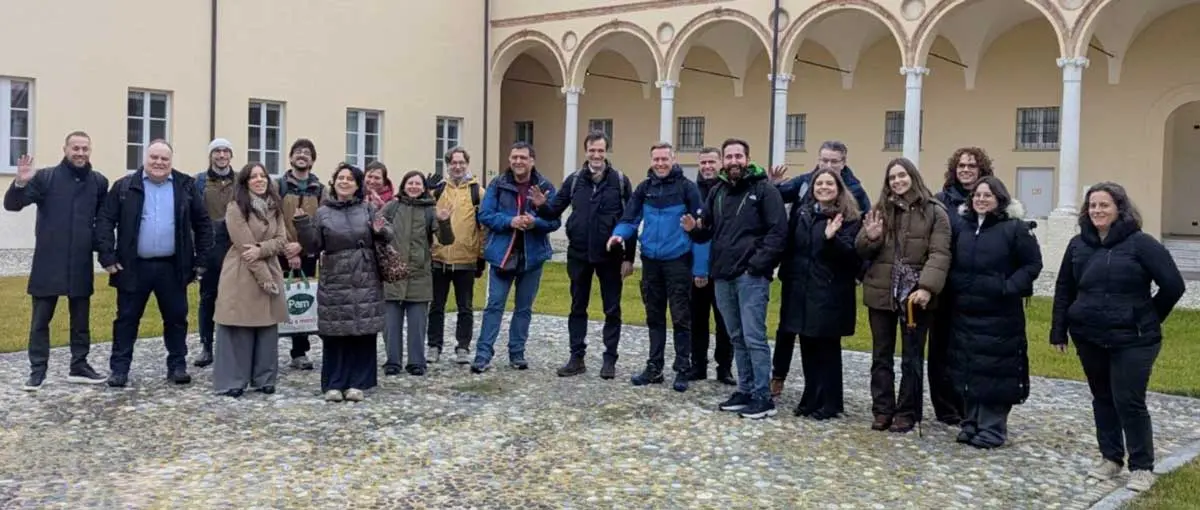
The project recently concluded with a final event held on 3-4 February 2026 in Cremona, during which the partners shared the final results and discussed the future use of the tools developed.
Through a rigorous scientific approach and empirical evidence, QuantiFarm has helped turn knowledge into practical tools to support the digitalisation and sustainability of the European agricultural sector.