
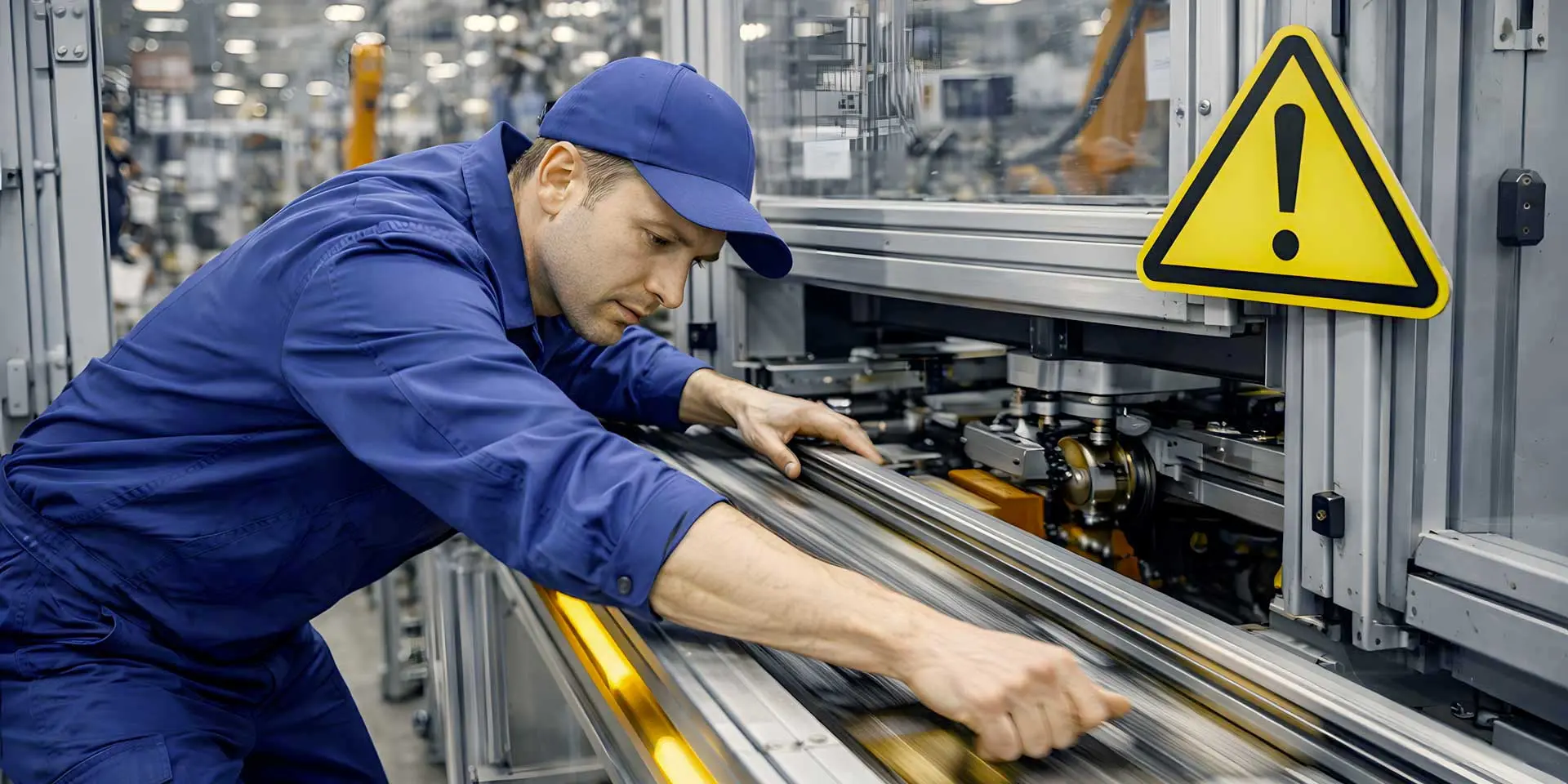
The international AIPER project, coordinated by Politecnico di Milano, has been launched to investigate how integrating AI-based decision support tools can enhance safety, well-being, and trust in industrial environments where humans and robots collaborate.
Human-Robot Collaboration (HRC) systems are transforming manufacturing environments by opening up new opportunities to improve the efficiency of industrial processes and reduce the physical and cognitive strain on workers. However, the introduction of collaborative robots also presents new challenges related to the complexity of interactions between people and automated systems, potential operational unpredictability, and the requirement for workers to adapt to increasingly flexible, technologically advanced collaborative methods.
The AIPER - AI-PowERed human-robot work environments for safe, healthy and trustworthy collaboration project is funded by the Saf€ra consortium and specifically for the Italian partners by the Italian National Institute for Insurance against Accidents at Work (INAIL), and investigates how AI-based decision-support tools can help make collaborative work environments safer, more sustainable, and people-centred.
The 24-month project has just started the 31st of January and involves a partnership comprising Politecnico di Milano as coordinator, the University of Salento, Plataforma Tecnológica Española de Seguridad Industrial (PESI), IPARTIC Consulting, and Institut National de l’Environnement Industriel et des Risques (INERIS).
The project takes an interdisciplinary approach, combining experimental studies, virtual simulations of industrial scenarios, and analyses of real-world cases with expert involvement.
The activities are divided into three main work packages (WPs).
The first WP, led by the Politecnico di Milano, investigates human cognitive and physiological responses, as well as individual differences, in HRC environments supported by AI-powered decision tools. These systems will provide real-time visual and auditory guidance to workers (e.g., flagging incorrect part selection) and dynamically adjust process parameters (e.g., speed or complexity) based on individual performance.
The second WP, led by PESI, IPARTIC consulting, and INERIS, focuses on digital solutions to enhance safety in HRC while addressing the diverse needs of workers. It will develop an Android-based decision support tool, tailored to simulated HRC environments, that delivers real-time (AI-driven) multimodal assistance (voice, visual, and text), to enable safe, scalable training and validation.
The third WP, led by UniSalento, integrates the results of the previous activities to develop operational guidelines and evidence-based recommendations for managing safely and effectively an HRC environment and guiding the safe and effective integration of AI-powered decision support tools in HRC environments.
The project's outcomes will provide concrete recommendations for designing safe, human-centric collaborative work environments, offering valuable guidance to companies, public decision-makers, and technology providers.